How to Use a Batting Tee: Drills, Setup & What Tee to Buy (From 18 Year’s Experience Running a Facility)
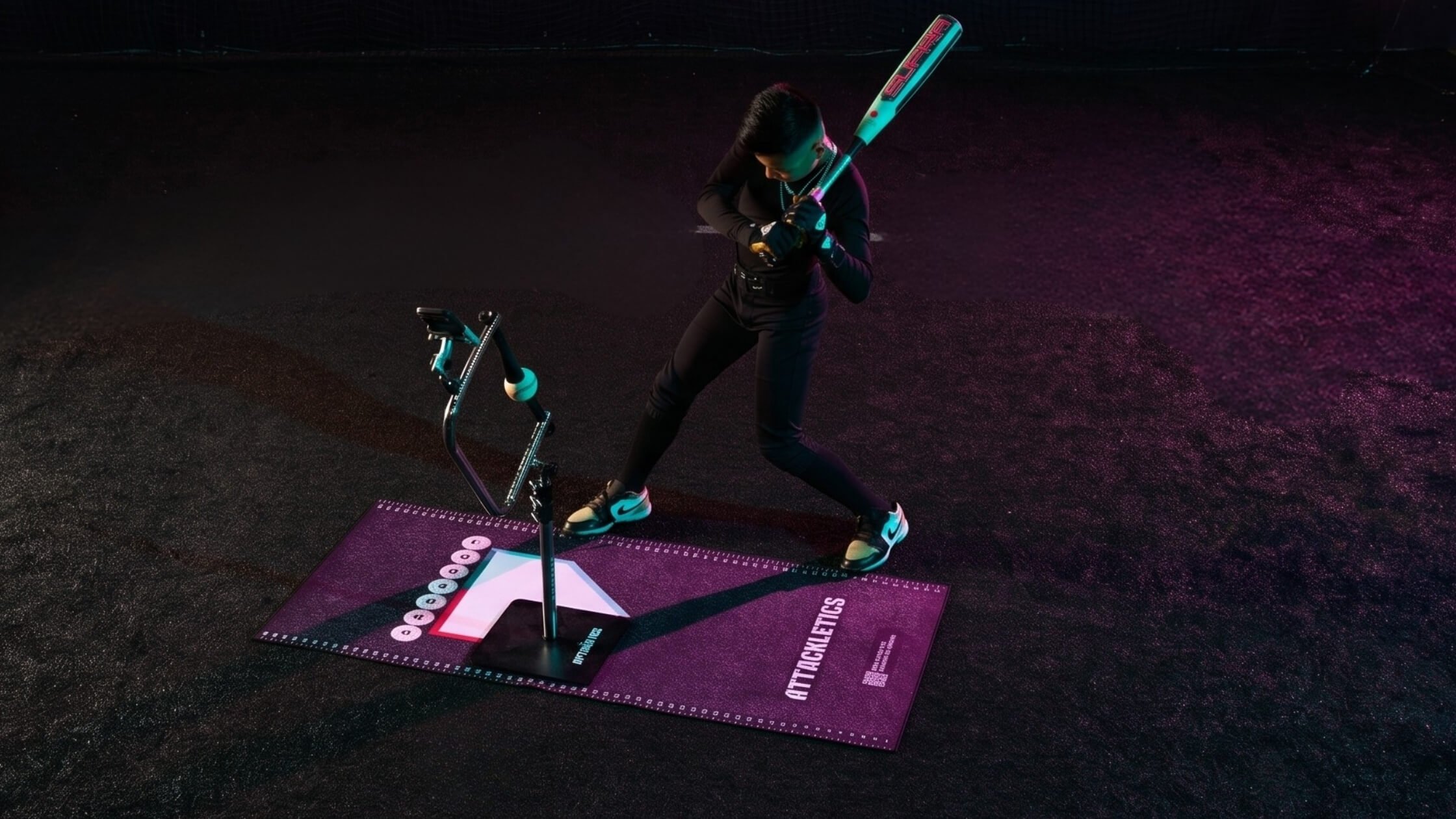
Attack Tee from Attackletics at On Deck
I've owned a batting facility for 18 years. Before that, we were the family with a jury-rigged cage in our backyard. Somewhere north of 100,000 cage sessions have happened under our roof, and I'd guess the majority of them started the same way: a kid steps into the lane, sets up a batting tee, and starts taking cuts.
Here's the thing almost nobody tells parents.
The tee is the most important piece of training equipment your kid owns, and it's also the most misused. I watch it every single day.
A kid sets the tee too high, takes 40 lazy swings at it while looking at their phone between reps, knocks it over twice, and leaves thinking they "got their work in." They didn't. They wasted 20 minutes.
This is everything I've learned about making tee work actually count.
The drills, the setup, the routine, and yes, the question every parent eventually asks me at the front desk: "What tee should I buy for home?"
I'll get to that one honestly, because I have opinions, and I sell training, not tees, so I have no reason to blow smoke.
Why the Tee Is the Most Underrated Tool in Hitting
Let me clear up the biggest misconception first. Parents think the tee is the beginner version of hitting, the thing you graduate from once your kid can hit live pitching. That's backwards.
Every level of baseball uses the tee. The reason it's called "tee ball" at the start has nothing to do with the tee being a beginner tool. Major leaguers take tee work daily. College programs build entire hitting progressions around it.
The reason is simple: the tee removes the one variable that makes hitting so hard, which is timing. When the ball isn't moving, your player can put 100% of their attention on the swing itself. Bat path. Contact point. Hip rotation. Hands. Posture. All of it, isolated, with no pitch to react to.
In our cages, the progression we use with serious hitters is always the same. Tee first, then soft toss, then the machine, then live.
Tee work is the foundation.
If the foundation is sloppy, everything stacked on top of it is sloppy too. You can't fix a swing fault against a 70 mph fastball.
You fix it on the tee, where the kid has all the time in the world to feel what's right, then you carry that feel up the chain.
So when a parent tells me their kid "just does tee work" at home like it's a consolation prize, I tell them they're doing the most valuable thing they could be doing. They're just probably doing it wrong. Let's fix that.
Set the Tee Up Right Before You Swing a Single Time
Most bad tee work is bad before the first swing, because the setup is wrong. Three things to get right every time.
Height. This is the one people botch most. The ball should sit at the height of the pitch you're training. If you're working on a pitch down the middle, the ball goes roughly at the bottom of the strike zone, around the player's beltline or slightly below. Not at the chest. Not at the knees.
I see kids set the ball way too high because it feels easier to hit, and all they're doing is grooving an uppercut that falls apart in games. If your player is working different pitch locations (and they should be, eventually), the tee height changes for each one. High pitch, raise it. Low pitch, drop it.
Placement relative to the body. For a pitch down the middle, the ball should be roughly even with the front foot, out in front of the body, not even with the back foot or the belly button. Contact happens out front.
If the tee is set too deep, the player learns to make contact too late, and that's a habit that murders their swing once real pitching shows up.
For inside pitches, the tee moves further out front. For outside pitches, it moves back and away. We'll get into that in the drills.
Stability. If the tee tips over or slides every time your kid makes contact, two bad things happen. First, they break their rhythm resetting it every few swings, which kills the volume that makes tee work valuable.
Second, and this is the one nobody thinks about, they unconsciously start swinging softer to avoid knocking the tee over. I've watched it happen a hundred times.
A kid with a light, wobbly tee starts babying their swing to protect the tee, and now they're grooving a weak, decelerating swing.
A tee that stays put lets a kid swing 100% every rep. That matters more than people realize, and it's a big part of why I have opinions about which tee to buy, which I'll get to.
The Tee Drills That Actually Work
There are a hundred tee drills floating around the internet. Most of them are fine. A handful are genuinely worth your kid's time. Here are the ones we actually run in our cages, in the order we'd run them.
1. The Middle-Middle Foundation Drill
Start here every session. Set the tee for a pitch down the middle, ball at beltline, even with the front foot, out front. Have your player take their normal stance and hit the ball with a full, controlled swing. The goal isn't power. The goal is a repeatable, balanced swing that finishes in the same place every time.
Watch the finish. A good swing finishes balanced, with the back foot rolling onto its toe and the chest facing the pitcher. If your kid is falling backward, lunging forward, or spinning off the ball, that's the fault to fix, and the tee is where you fix it. Do 15 to 20 reps. This is the warm-up that calibrates everything else.
2. The Inside-Outside Location Drill
This is the drill that separates kids who do real tee work from kids who just hit balls off a stick. Move the tee to three positions across the plate and hit a set at each one.
For the inside pitch, move the tee forward, out in front of the plate, and slightly toward your player's body. The contact point for an inside pitch is further out front, because you have to get the barrel there before the ball gets deep. Teach your player to pull their hands in tight and turn on it.
For the middle pitch, back to the foundation position from drill one.
For the outside pitch, move the tee back, deeper in the stance, and away from your player's body toward the outside corner. The contact point is deeper, and the goal is to drive the ball the other way, not yank it foul. This is the single most undertrained skill in youth hitting. Almost every kid can pull an inside pitch. Almost no kid can drive an outside pitch the other way, because they never practice it. The tee is the only place you can drill it with total control.
Ten reps at each location. This drill alone, done consistently, will do more for your player's in-game contact than any amount of swinging at middle-middle.
3. The Two-Tee Swing Path Drill
This is an old Little League drill that still works because the geometry doesn't lie. Set up your main tee with a ball at the beltline. Then set a second tee about a foot behind the first one, with the ball raised six inches higher than the first ball.
The point: your player swings and hits the front ball without clipping the back ball. If they have an uppercut or a long looping swing, they'll smack the back tee. If they have a short, swing path to the ball, they'll miss it cleanly. It's instant feedback with no coaching required. The tee tells the truth.
If you've only got one tee at home, you can approximate this by laying a bat or a piece of PVC pipe across a couple of buckets behind the tee at the right height. Not as clean, but it works.
Of course, there are also training tees out there that actually actively teach proper swing plane for hitters, but we’ll get to that shortly.
4. The Pause-and-Load Drill
Set up middle-middle. Have your player get into their stance, then take their stride and load (hands back, weight gathered), and hold that loaded position for a full second before swinging. This isolates the load from the swing and teaches the body the proper sequence: load first, then fire.
Most young hitters rush. They load and swing in one frantic motion and lose all their power because the lower half and the hands fire at the same time instead of in sequence. The pause forces separation. It feels awkward at first. That awkwardness is the point, it means they're feeling a sequence they've never felt before. Fifteen reps.
5. The One-Hand Isolation Drill (Advanced)
For older players, 12 and up, who already have a solid base. Choke up on a lighter bat and take slow, controlled swings using only the top hand, then only the bottom hand. This exposes weakness in bat control and teaches each hand its job in the swing.
Top hand drives through contact, bottom hand pulls the knob. Do not do this with a normal-weight bat or with young kids, it's a good way to develop bad compensations or tweak a wrist. Light bat, slow swings, older players only.
How Often, and How Many
The question I get constantly: how much tee work is enough?
For a committed youth player, I tell parents to aim for tee work most days, even if it's short. Quality and consistency beat marathon sessions. A focused 50 to 75 swings a day, run through the location drill above, will transform a swing over a season far more than a once-a-week 300-swing grind that leaves the kid bored and sloppy by rep 100.
The pros take tee work daily because they understand that hitting is a maintenance skill, not a thing you "fix" once. The swing degrades without reps. Daily, focused, intentional reps keep it sharp. Your kid doesn't need to be a pro to borrow the pro's habit.
One warning: tee work only helps if it's focused. Fifty intentional reps where your player is checking their finish, working locations, and feeling their swing beats 200 mindless reps every time. If they're going to zone out and just whack balls, cut the session short. Mindless reps groove mindless swings.
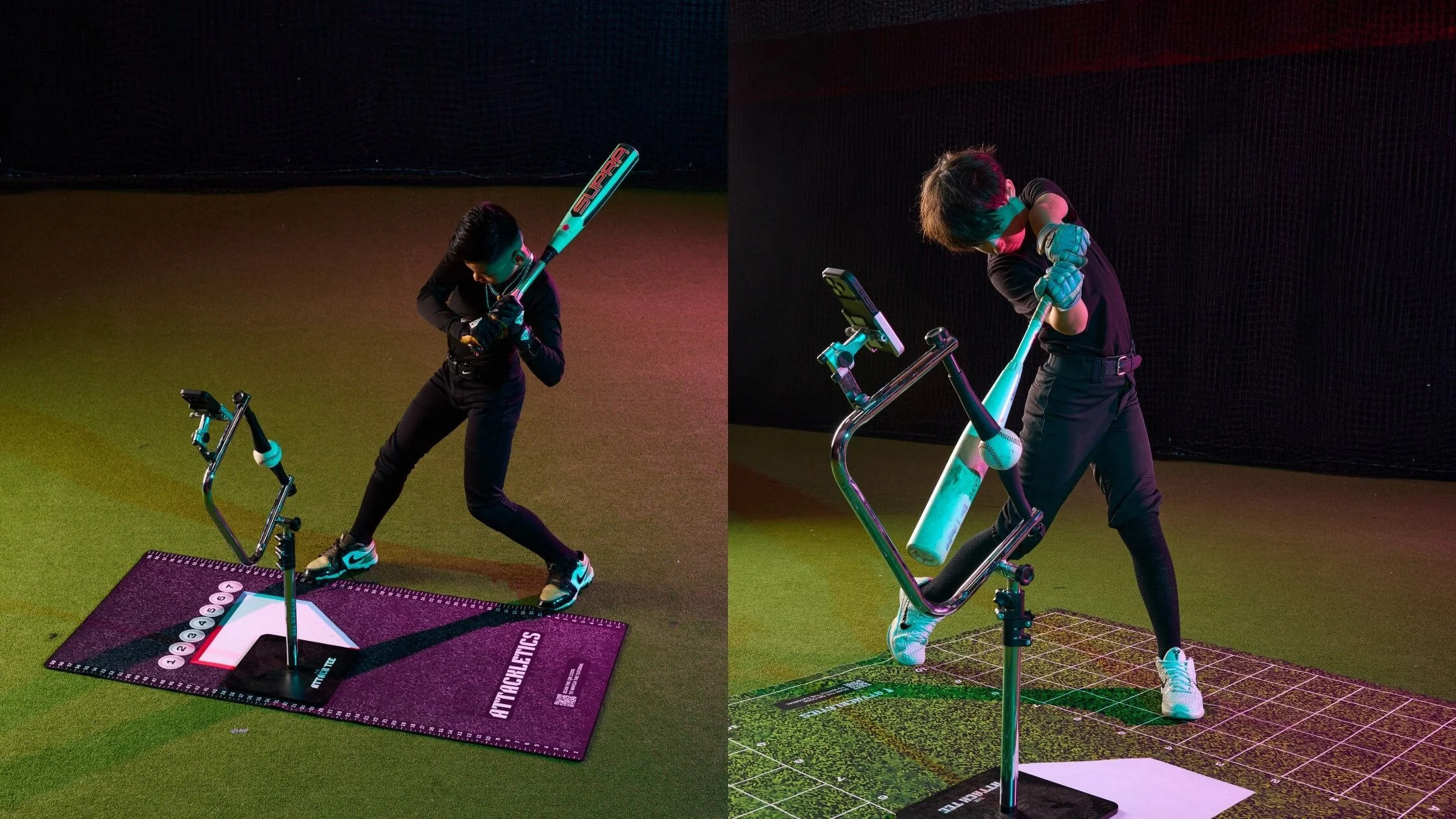
Attack Tee from Attackletics in action at On Deck
"What Tee Should I Buy for Home?" My Honest Answer
This is the front-desk question I get more than any other, so let me answer it the way I'd answer it if you were standing across from me.
First, what matters in a tee. Three things, in order:
Adjustability. Your kid needs to work different pitch heights and locations. A tee that only does one height is a tee that only trains one pitch. And if you've got a kid who's going to grow (you do), the tee needs to grow with them.
Stability. I said it above and I'll say it again because it's the whole ballgame. A tee that tips, slides, or "walks" forward every swing wrecks the session and teaches your kid to baby their swing. Heavy, stable base. Non-negotiable.
Durability. A home tee takes thousands of swings. Cheap rubber tops split, cheap stems bend, cheap bases crack. You'll buy three cheap tees in the time one good tee lasts.
Now, the honest part. The default answer old school people might give is "buy a Tanner," and Tanners are genuinely good tees, especially the Heavy version. But the tee we actually put in our players' hands, and the one I recommend to the families who ask, is the Attack Tee from Attackletics.
Here's why, specifically.
The Attack Tee’s allows hitters to train different swing paths based on MLB Statcast data showing optimal attack angles for all nine strike zone locations they’ll face.
Youth players who learn proper attack angles early in their development build better barrel accuracy, higher exit velocities, and more consistent hard contact throughout their careers.
The beauty is that young players don’t need to understand these complex statistics.
Well-designed bat path trainers with adjustable tee mouths teach players how to get on the proper swing plane just through regular use during their development years.
Traditional, old school batting tees force one swing plane regardless of pitch location, severely limiting youth development potential:
One swing plane can’t cover nine zones needed for complete development
Youth players need to learn different attack angles for high vs. low pitches
Inside vs. outside pitches require different approaches from early ages
Fixed angle old school tee can create bad habits that must be unlearned later
The Attack Tee also has a 17.2 pound iron base, which is the heaviest in baseball/softball and means it does not move, period. After 18 years of watching tees tip over and kids baby their swings, a base that genuinely stays planted through a full session of hard cuts is worth a lot to me.
And the Attack Tee is made of pure nearly-indestructible iron and can take a beating from the biggest and strongest pro hitters. These things have the best durability and longevity out of any batting tee I’ve purchased over the years, and we have bought and tried literally every tee on the market.
Also, the Attack Tee adjusts up and down across the full range of pitch heights, so every drill above (the location work especially) is easy to set up. This tee actually also has the most high and low height adjustability out of every batting tee on the market, so it’ll work for your ballplayer from 4 years old through the Big Leagues.
Attack Tees even pair with an iOS app that shows you the correct tee swing path angle and tee placement for any pitch location in the strike zone. For the inside-outside location drill, that's a cheat code. Instead of eyeballing where the outside-corner tee should sit, the app tells you, and your kid trains the exact contact point a real outside pitch demands.
If you want to dig into the specifics, the Attackletics team has a detailed breakdown of how to choose a tee by your kid's age that's worth reading before you buy anything.
If the Attack Tee is out of your budget, a Tanner Heavy is a perfectly respectable second choice and I won't tell you otherwise. Just please, whatever you do, don't buy the $25 plastic tee from the big-box sporting goods store. You'll be back for a real one within a season, and your kid will have spent that season grooving an inefficient swing on a tee that can’t even stay upright.
Where the Reps Become Results
Tee work is the foundation, but it's the start of the progression, not the end of it. The feel your kid builds on the tee has to get carried up through soft toss, the machine, and live pitching for it to show up in games. That's the part you can't fully do in a garage, and it's the reason facilities like ours exist.
We've spent 18 years building a place where a kid can run that full progression in one session, tee through live, with coaches who can see the fault on the tee and fix it before it calcifies.
Our new Huntington Beach facility has nine oversized cage lanes, real pitching machines dialed for every level, and the same coaches who've been doing this since the Signal Hill days.
If your kid is putting in the tee work at home and you want to see it translate, come take some cuts with us. Bring what you've been working on. We'll help you carry it up the chain.
But it starts with the tee. It always starts with the tee. Set it up right, run the drills that matter, swing with intent, and do it consistently. That's the whole secret, and now you know it.
Mike Rogers is the co-owner of On Deck Batting Cages, a baseball and softball training facility serving the Long Beach and Huntington Beach area for over 18 years. Have a question about your player's swing? Stop by the cages or reach out, we're always happy to talk hitting.